
Preventing Slip and Fall Injuries at Home or Work: A Complete Safety Guide
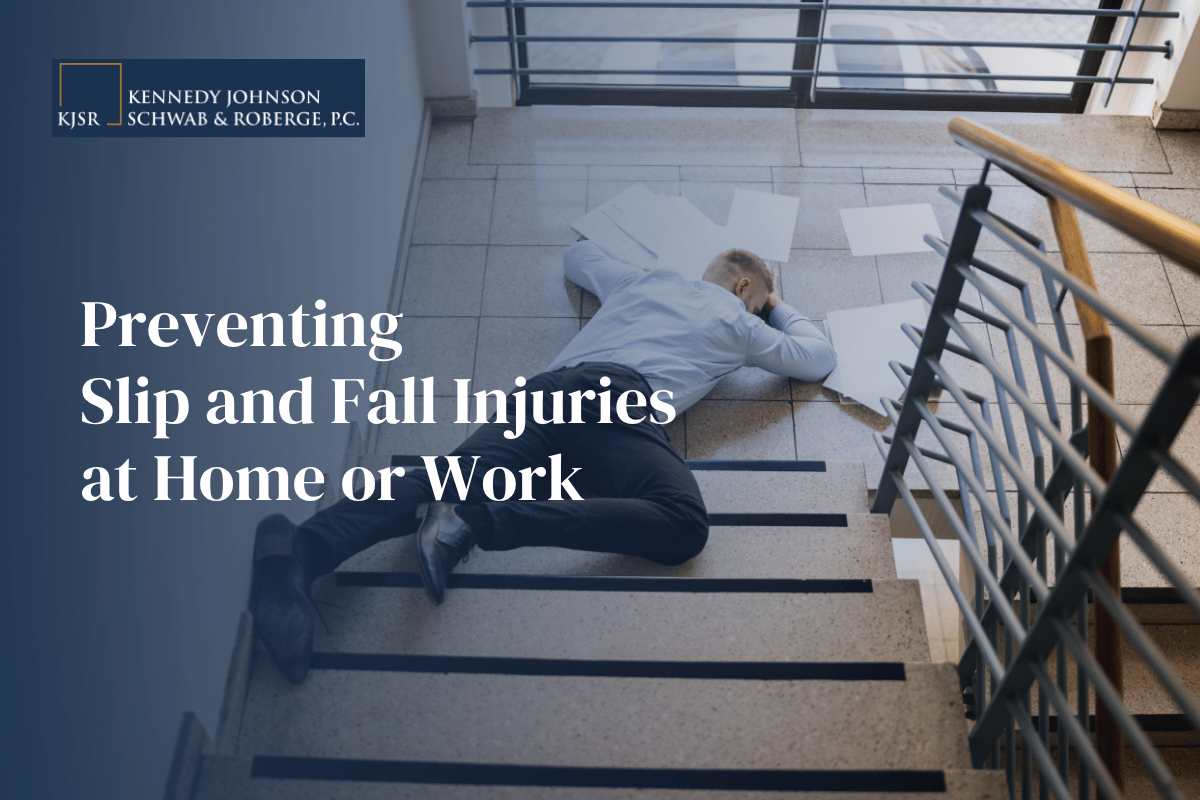
A fall happens in a matter of seconds. A wet bathroom floor, a broken step, poor lighting, or an icy parking lot is sometimes all it takes to cause a life-changing injury. These hazards appear in homes, apartment complexes, grocery stores, restaurants, offices, and parking garages.
While no safety plan can truly eliminate every fall, many injuries are preventable. Recognizing hazards early and correcting them promptly helps protect family members, guests, employees, and visitors. adipiscing elit. Ut elit tellus, luctus nec ullamcorper mattis, pulvinar dapibus leo.
Key Takeaways
- Clean spills immediately and keep people away from the area until the surface is dry.
- Repair loose flooring, damaged steps, uneven pavement, and other walking hazards.
- Improve lighting near stairs, entrances, hallways, and outdoor paths.
- Use secure handrails and choose footwear that fits properly and provides reliable traction.
- Report hazards so the property owner or manager can address them before someone falls.
Table of Contents
- Why Slip and Fall Prevention Matters
- How to Prevent Slip and Fall Injuries at Home
- Preventing Slip and Fall Hazards in the Workplace
- Slip and Fall Prevention Tips for Everyone
- What to Do After a Slip and Fall Accident
- Making Homes and Workplaces Safer
- Frequently Asked Questions About 2026 Accident Claims
Why Slip and Fall Prevention Matters
A ground-level fall might not sound especially dangerous. There is no ladder or long drop involved. Even so, hitting a hard floor, countertop, wall, or piece of furniture can cause serious harm before a person has time to catch themselves.
While older adults face the greatest risk of severe complications, people of any age can be hurt. A person who slips on water or catches a foot on a loose rug can be left in pain and unable to move as freely as before. Sometimes recovery takes an extended period of time.
Common injuries include:
- Back or spinal cord injuries
- Broken wrists, arms, ankles, or hips
- Cuts and other wounds
- Dislocated shoulders
- Sprains, torn ligaments, or muscle injuries
- Traumatic brain injuries (TBIs)
- Ongoing pain or mobility problems
The Facts About Slip and Fall Accidents
A loose rug or wet patch doesn’t always look especially dangerous. Yet fall injuries remain a serious problem at home and in the workplace.
- Falls are a leading cause of preventable death: Falls rank second among the nation’s leading causes of preventable death since 2022. The National Safety Council (NSC) notes that most fatal falls involve adults 65 and older.
- Older adults face the highest risk: According to the Centers for Disease Control and Prevention (CDC), more than one in four older adults falls each year, leading to about 3 million emergency department visits.
- Workplace falls do not always involve ladders or roofs: According to the U.S. Bureau of Labor Statistics, falls, slips, and trips caused 844 worker deaths in 2024, accounting for about 17% of all fatal occupational injuries. Same-level falls alone caused 145 worker deaths.
- A CDC-hosted study estimated that rugs and carpets were associated with nearly 38,000 emergency department visits among older adults each year during the study period. Most of those falls happened at home.
What Is the Difference Between a Slip and a Trip?
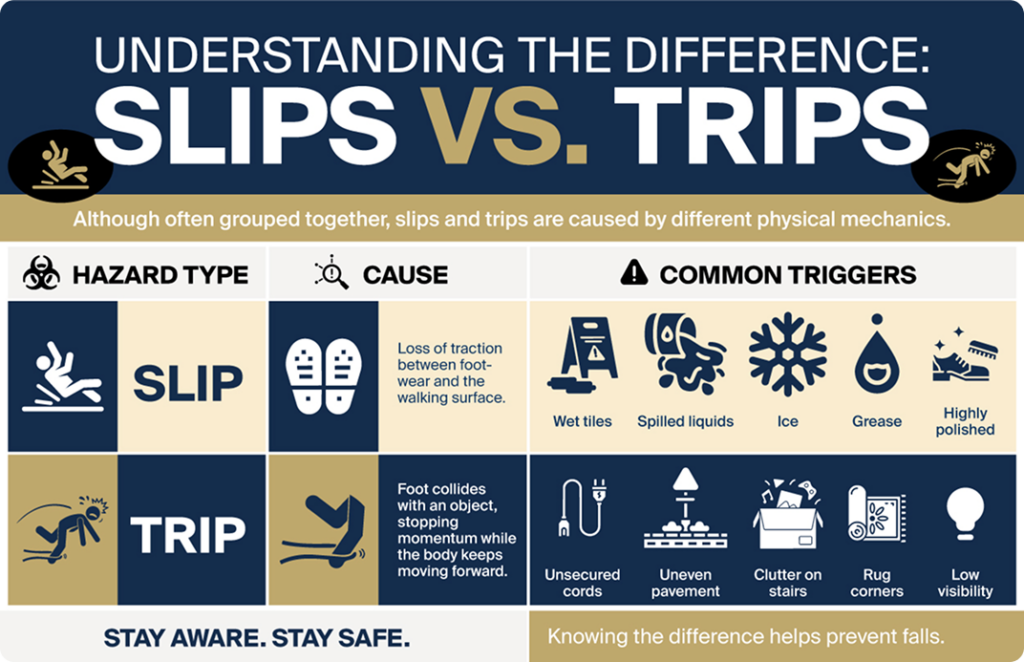
A slip is generally a loss of traction, whereas a trip involves a collision with an object or uneven surface. Both often lead to a dangerous fall. Slips and trips happen for different reasons, so preventing them requires different fixes. Recognizing the type of hazard makes it easier to address the problem before someone falls.
How to Prevent Slip and Fall Injuries at Home
Many serious falls happen in and around the home, even in places people use every day. Familiar spaces are easy to stop noticing. A rug shifts out of place, or a handrail loosens, and over time, the problem begins to feel normal.
Preventing falls at home starts with taking another look at how people move through each room. The most useful improvements focus on traction, water-prone areas, stairs, and the shoes people wear indoors.
Keep Floors Clean and Dry
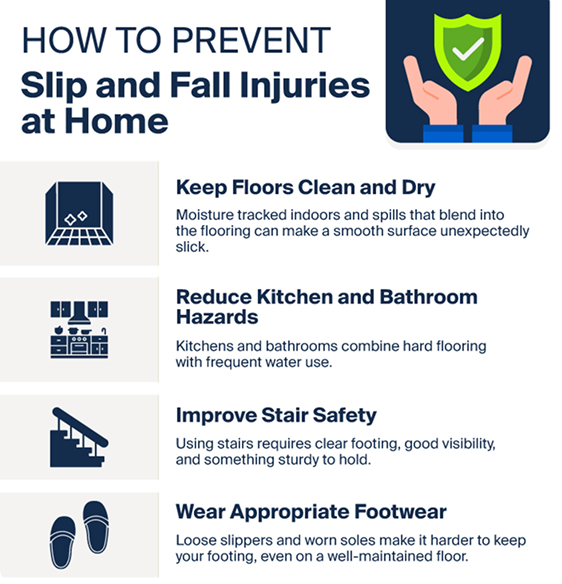
Moisture tracked indoors and spills that blend into the flooring can make a smooth surface unexpectedly slick. Clean spills as soon as you notice them, and keep people away from the area until it’s completely dry.
A few useful options include:
- Non-slip mats in areas that regularly get wet
- Absorbent rugs inside entryways
- Bathroom mats with rubber or slip-resistant backing
- Slip-resistant flooring or coatings in frequently wet rooms
Check mats and rugs regularly, replacing any that bunch up or slide. After mopping or washing a floor, wait until the entire surface has dried before walking on it.
Reduce Kitchen and Bathroom Hazards
Kitchens and bathrooms combine hard flooring with frequent water use. A splash from the sink or a small puddle outside the shower can easily create a fall hazard, so keep towels nearby and wipe up spills right away.
The Mayo Clinic’s shower safety guide recommends keeping floors dry and adding features that make bathing areas easier to use. Helpful improvements include:
- Properly anchored grab bars near toilets, tubs, and showers
- Non-slip bath mats or adhesive strips
- A shower chair for someone who has trouble standing or balancing
- A handheld showerhead that’s easy to use while seated
- A walk-in or curbless shower when appropriate
- Bright lighting throughout the room
Towel racks aren’t designed to support a person’s weight and shouldn’t be used as a substitute for grab bars.
Improve Stair Safety
Using stairs requires clear footing, good visibility, and something sturdy to hold. Even a familiar staircase becomes dangerous when a step is loose, or someone can’t see where they’re placing their feet.
To make stairs safer:
- Install sturdy handrails on both sides when possible
- Repair loose steps, broken boards, and torn carpeting immediately
- Keep shoes, packages, cords, and other clutter off the stairs
- Add securely fastened, slip-resistant stair treads where needed
- Make sure the entire stairway is well-lit
- Place light switches at both the top and bottom of the stairs
- Carry smaller loads so you can see each step and reach the handrail
Wear Appropriate Footwear
Loose slippers and worn soles make it harder to keep your footing, even on a well-maintained floor. Choose shoes that stay securely on your feet and provide enough traction for the surface beneath you. Look for:
- Slip-resistant soles
- Visible, unworn tread
- A secure but comfortable fit
- Adequate arch or ankle support
- A low, stable heel
- Laces, straps, or other secure fastenings
Replace shoes once the tread becomes smooth. On slick indoor floors, supportive house shoes with enclosed backs provide better footing than socks or backless slippers.
Preventing Slip and Fall Hazards in the Workplace
The Occupational Safety and Health Administration (OSHA) sets workplace safety requirements. However, rules alone don’t keep a floor dry or repair a broken step. Employers are responsible for maintaining the property and providing the protection each job requires. Employees also play a part by following safety procedures and reporting hazards before someone gets hurt.
Inspect and Maintain Walking Surfaces
Employers shouldn’t wait for a complaint or an accident to inspect the areas where people walk. Clean, open pathways give employees enough room to move without stepping around equipment or other obstacles. Routine inspections should include:
- Hallways and aisles
- Staircases and ramps
- Entrances and exits
- Parking lots and sidewalks
- Warehouse and production floors
- Loading docks
- Break rooms and restrooms
OSHA’s walking-working surfaces standard requires regular inspections and timely repairs. Cracks, potholes, loose flooring, damaged railings, and similar hazards should be corrected as soon as they’re found. If a repair can’t be made immediately, access to the area should be blocked until it’s safe again.
Clean Spills Immediately
Every workplace needs a clear procedure for reporting and cleaning spills. Employees should know where to find cleanup supplies and whom to notify when they discover a wet or contaminated floor.
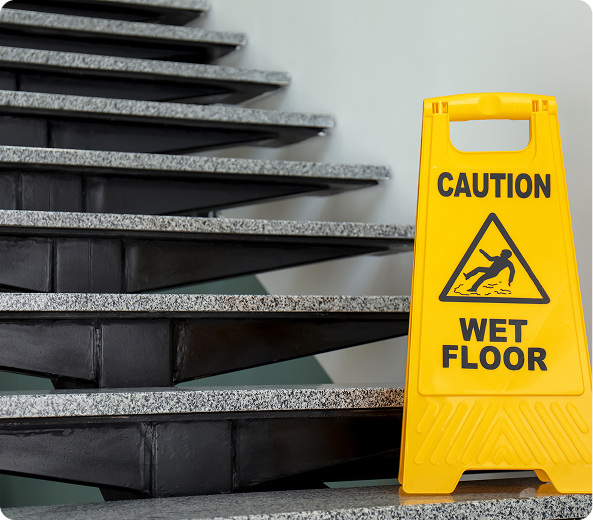
Use cones or warning signs to keep people away from the area during cleanup. Those signs should remain in place until the floor is completely dry. A warning sign doesn’t replace cleaning the spill itself.
Keep Work Areas Clear
A clutter-free workplace gives employees room to move without stepping over objects or squeezing around equipment. Everyone who uses the space can help keep it safe by:
- Putting tools and supplies away after use
- Securing extension cords, cables, and hoses
- Removing empty boxes and discarded packaging
- Keeping exits and walkways clear
- Closing drawers and cabinet doors
- Storing materials away from stairs and doorways
Employers should provide adequate storage and address recurring housekeeping issues rather than expecting employees to work around them.
Match Safety Equipment and Training to the Job
Training should reflect the work employees actually perform. Someone who uses a ladder, for example, needs to know how to select the right type, inspect it for damage, and place it on a stable surface.
Depending on the industry and task, workers may need:
- Slip-resistant footwear
- Appropriate ladders or work platforms
- Guardrails or other fall protection systems
- Safety harnesses and personal fall arrest systems
- Personal protective equipment (PPE) suited to the work
Construction workers and employees working at heights require additional protection. OSHA’s fall protection standards explain the requirements that apply across different industries and working conditions.
The Facts About Slip and Fall Accidents
A loose rug or wet patch doesn’t always look especially dangerous. Yet fall injuries remain a serious problem at home and in the workplace.
- Falls are a leading cause of preventable death: Falls rank second among the nation’s leading causes of preventable death since 2022. The National Safety Council (NSC) notes that most fatal falls involve adults 65 and older.
- Older adults face the highest risk: According to the Centers for Disease Control and Prevention (CDC), more than one in four older adults falls each year, leading to about 3 million emergency department visits.
- Workplace falls do not always involve ladders or roofs: According to the U.S. Bureau of Labor Statistics, falls, slips, and trips caused 844 worker deaths in 2024, accounting for about 17% of all fatal occupational injuries. Same-level falls alone caused 145 worker deaths.
- A CDC-hosted study estimated that rugs and carpets were associated with nearly 38,000 emergency department visits among older adults each year during the study period. Most of those falls happened at home.
Slip and Fall Prevention Tips for Everyone
Many falls happen during ordinary routines. Paying attention to the next few steps and slowing down when conditions change gives you more time to avoid a hazard. Speaking up about unsafe conditions also protects the people who use the space after you.
Stay Aware of Your Surroundings
Looking at your phone takes your attention away from the path ahead. If you need to read or send a message, stop somewhere safe first. Keep your eyes up when entering an unfamiliar space or moving through an area where conditions change quickly. Watch for:
- Changes between flooring materials
- Curbs, steps, and ramp edges
- Spills or recently cleaned floors
- Ice, snow, and other wet surfaces
- Cracks, potholes, and uneven sidewalks
- Objects or cords in the walkway
- Loose rugs
Eliminate Floor and Rug Hazards
Loose rugs and cords stretched across the floor are easy to tolerate until someone catches their foot and trips. Damaged flooring poses the same risk and usually worsens over time.
- Secure or remove rugs: Place a non-skid underlay beneath each rug or use double-sided rug tape that’s suitable for the floor. Remove rugs that won’t stay flat.
- Repair damaged flooring: Fix loose floorboards, torn carpeting, cracked tiles, and raised edges as soon as possible.
- Manage cables: Route electrical and charging cords along walls. If a cord must cross a walkway, use a secure cord cover.
- Keep floors clear: Store shoes, bags, toys, and other belongings outside normal walking paths.
Use Handrails Whenever They Are Available
Use the handrail even when the stairs or ramp are familiar. It gives you a steady point of support if you miss a step or lose your balance. Keep one hand free whenever possible, and don’t use a handrail to hang bags or other items that make it difficult to grasp.
Property owners should check that handrails are secure, easy to reach, and available for the full length of the stairs or ramp.
Give Yourself More Time
Rushing leaves less time to notice a hazard and react to it. Slow down when:
- Carrying something heavy or awkward
- Walking across icy or wet surfaces
- Entering an unfamiliar building
- Climbing or descending stairs
- Moving through a crowded area
If what you’re carrying blocks your view, divide it into smaller loads or ask someone for help.
Report Hazards
If you notice a wet floor, broken step, loose handrail, or another dangerous condition, report it right away. At work, follow the employer’s reporting procedure. In an apartment complex or public place, notify the property manager and provide the exact location of the problem.
When it’s safe and you are able to do so, warn others or keep them away from the area until the hazard has been marked or corrected.
What to Do After a Slip and Fall Accident
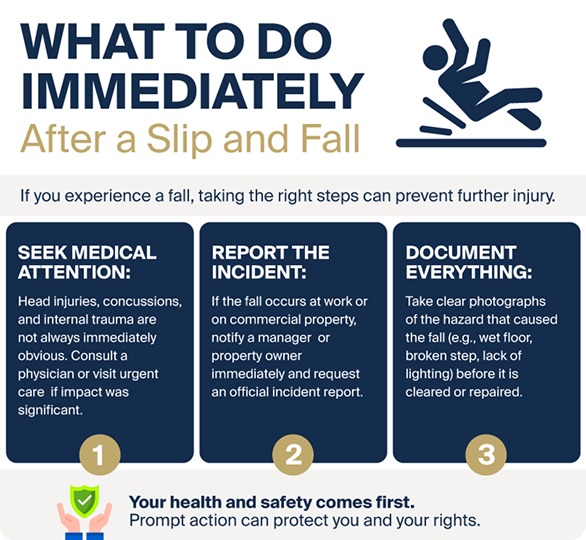
A fall can leave you shaken, making it harder to decide what needs attention first. Having a clear plan helps protect your health and preserve important details without relying on memory later.
Even if you feel fine, seek medical attention. The Centers for Disease Control and Prevention (CDC) explains that symptoms of a concussion or mild traumatic brain injury don’t always appear right away. Some take hours or days to develop.
Making Homes and Workplaces Safer
Preventing falls is about more than avoiding a bruise or an embarrassing moment. One fall can mean months of treatment, missed work, unexpected expenses, and a lasting loss of confidence or independence.
Many of the most effective precautions are simple. Drying a spill, securing a rug, repairing a loose step, using a handrail, or reporting a hazard all help lower the risk. Safer spaces don’t depend on one person alone. Everyone who uses or maintains a home or workplace has a reason to notice hazards and address them before someone gets hurt.
Frequently Asked Questions About 2026 Accident Claims
Who Is Most at Risk for Slip and Fall Injuries?
Adults 65 and older face the greatest risk of serious complications. Balance problems, reduced vision, certain medications, and health conditions can increase a person’s risk further.
Can Younger People Suffer Serious Slip and Fall Injuries?
Yes. People of any age can suffer broken bones, head injuries, spinal injuries, or other serious harm in a fall. Even a ground-level fall can have lasting effects.
Where Do Slip and Fall Accidents Commonly Happen?
Falls frequently occur in bathrooms, kitchens, stairways, sidewalks, parking lots, stores, and workplaces. Any area with a wet, uneven, cluttered, or poorly lit walking surface can become dangerous.
Are All Slip and Fall Accidents Preventable?
No amount of precaution can prevent every fall. Still, correcting hazards promptly and following basic safety practices can greatly reduce the risk.