
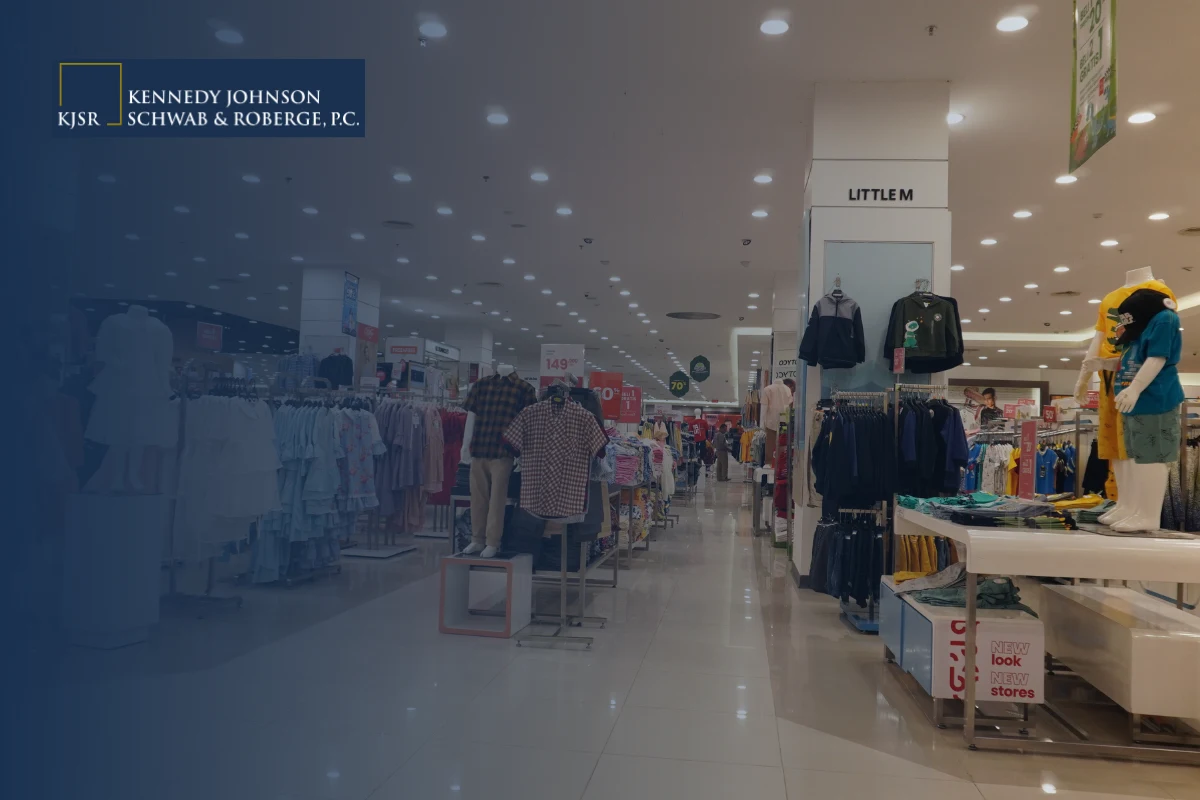
The Most Common Causes of Injuries in Connecticut Retail Stores
Retail store injuries usually occur because a hazard was overlooked, ignored, or not addressed quickly enough. Many of these accidents are preventable with routine inspections and basic safety practices. Common causes include:
Spills and Leaks
Unattended spills, leaking refrigeration units, tracked-in rain or snow, and recently mopped floors are among the most frequent causes of retail injuries. In many cases, the key issue is how long the hazard was present. Stores are expected to inspect aisles regularly and clean up liquid hazards within a reasonable time.
Surveillance footage, cleaning logs, and employee reports often determine whether a spill should have been discovered before someone was hurt.
Damaged and Uneven Floors
Loose tiles, worn mats, torn carpeting, uneven transitions between surfaces, and defective stairs can create tripping hazards. These issues often develop gradually, which means the store may have had prior notice of the problem.
When a condition has existed for days or weeks without repair, it can strengthen a premises liability claim.
Falling Merchandise
Retail stores that stack products high or build large promotional displays must ensure those items are stable and secure. Falling merchandise incidents frequently involve overloaded shelving, unstable displays, or improperly assembled fixtures.
These accidents can injure customers and cause serious workplace injuries to employees. For customers, stores may be responsible if employees failed to follow safety policies or if the display was not assembled or maintained properly.
Poor Lighting
Poor lighting can make it difficult for customers to see spills, obstacles, or changes in floor level. In parking lots and entryways, inadequate lighting may also increase the risk of criminal activity. In some situations, a property owner’s failure to provide reasonable lighting or security measures in areas where criminal activity was foreseeable may give rise to a negligent security claim.
Types of Injuries That Occur in Retail Store Accidents
Retail store accidents can result in injuries ranging from relatively minor soft-tissue damage to life-altering trauma. Falls on hard flooring, being struck by falling merchandise, or exposure to hazardous substances can cause serious physical harm.
Common injuries include:
- Traumatic brain injuries and concussions
- Spinal cord injuries
- Broken bones and fractures
- Torn ligaments and soft-tissue injuries
- Cuts and lacerations
- Chemical burns
- Permanent impairment or, in severe cases, amputation
The severity of an injury often determines the complexity and value of a premises liability claim.
Who Is Responsible for Damages After a Retail Store Accident?
Responsibility for a retail store accident depends on who had possession and control of the area where the injury occurred. In Connecticut, businesses that invite customers onto their premises have a duty to maintain reasonably safe conditions and to address hazards they knew or reasonably should have known about.
In many cases, more than one party may share responsibility.
Store Owners and Retail Operators
The retail business operating the store is often responsible for monitoring aisles, inspecting the premises, and correcting unsafe conditions. If employees fail to clean up a spill, repair a known flooring issue, or properly secure merchandise, the business may be liable for resulting injuries. Businesses are generally responsible for the actions of their employees when those actions occur within the scope of employment.
Property Owners & Landlords
If the store is located within a shopping plaza or commercial building, the property owner may retain responsibility for common areas such as sidewalks, entryways, or parking lots. Lease agreements often determine which party is responsible for maintenance and repairs.
Third-Party Contractors
Cleaning companies, maintenance providers, or security contractors may also share liability if their negligence contributed to the unsafe condition. For example, a contractor who mops a floor without placing warning signs or leaves equipment in a walkway may be partially responsible for an injury.
Determining liability often requires reviewing incident reports, surveillance footage, maintenance records, and contractual agreements.
What Are My Compensation Options After a Retail Injury?
If you were injured in a retail store, you may be entitled to recover compensation for the financial and personal impact of the injury. In Connecticut premises liability claims, damages commonly include:
- Medical expenses
- Rehabilitation and physical therapy
- Lost wages
- Pain and suffering
- Emotional distress
- Loss of enjoyment of life
- Permanent disability or disfigurement
- Out-of-pocket expenses
In many cases, injury claims are resolved through insurance negotiations. However, if a fair resolution cannot be reached, you can also file a lawsuit for your injuries to pursue compensation through the court system.
Examples of Retail Premises Liability Results
When a retail business fails to address unsafe conditions and serious injuries result, the financial impact can be substantial. The notable case results below reflect prior retail-related results obtained by our legal team.
$800K
Claim by a 45 year old man hit in the head when a display rack sign fell at a retail store sustaining a forehead laceration which resulted in infection and loss of sight.
Premises Liability
$375K
Fall in a depression of a retail store floor by 42 year old woman resulting in a left hip injury requiring surgery.
Premises Liability
$375K
Grocery store employees negligently pushing shopping cart into 79-year-old woman, knocking her to the ground.
Personal Injury
$345K
Settlement of a slip and fall on ice outside a retail store in a shopping complex which resulted in neck fusion surgery on the young female plaintiff.
Premises Liability
$300K
Physical assault and robbery outside a retail store resulting in a fractured orbital and neck and post traumatic stress disorder.
Premises Liability
Get Trusted Legal Help With Your Retail Store Accident Today
If you were injured in a Connecticut retail store, the next steps may not be clear. Retail accident claims often depend on evidence such as surveillance footage, maintenance records, and witness accounts. Acting promptly can help preserve that information and clarify who may be responsible. At KJSR, we’re committed to helping injured retail store customers understand their rights, build strong claims, and pursue the compensation they deserve.
“Handled my case with amazing expertise from start to finish.” – Nate H.
If you or a loved one was hurt due to unsafe conditions, negligent employees, or inadequate security at a retail store, we are here to help. Contact our firm today at 203-865-8430 for a free, no-obligation consultation and let us help you take the next step toward recovery and justice.